Why NextRows Adopted Bun for a Stable, Dependency-Free Desktop Runtime
By NextRows Team · · 3 min read
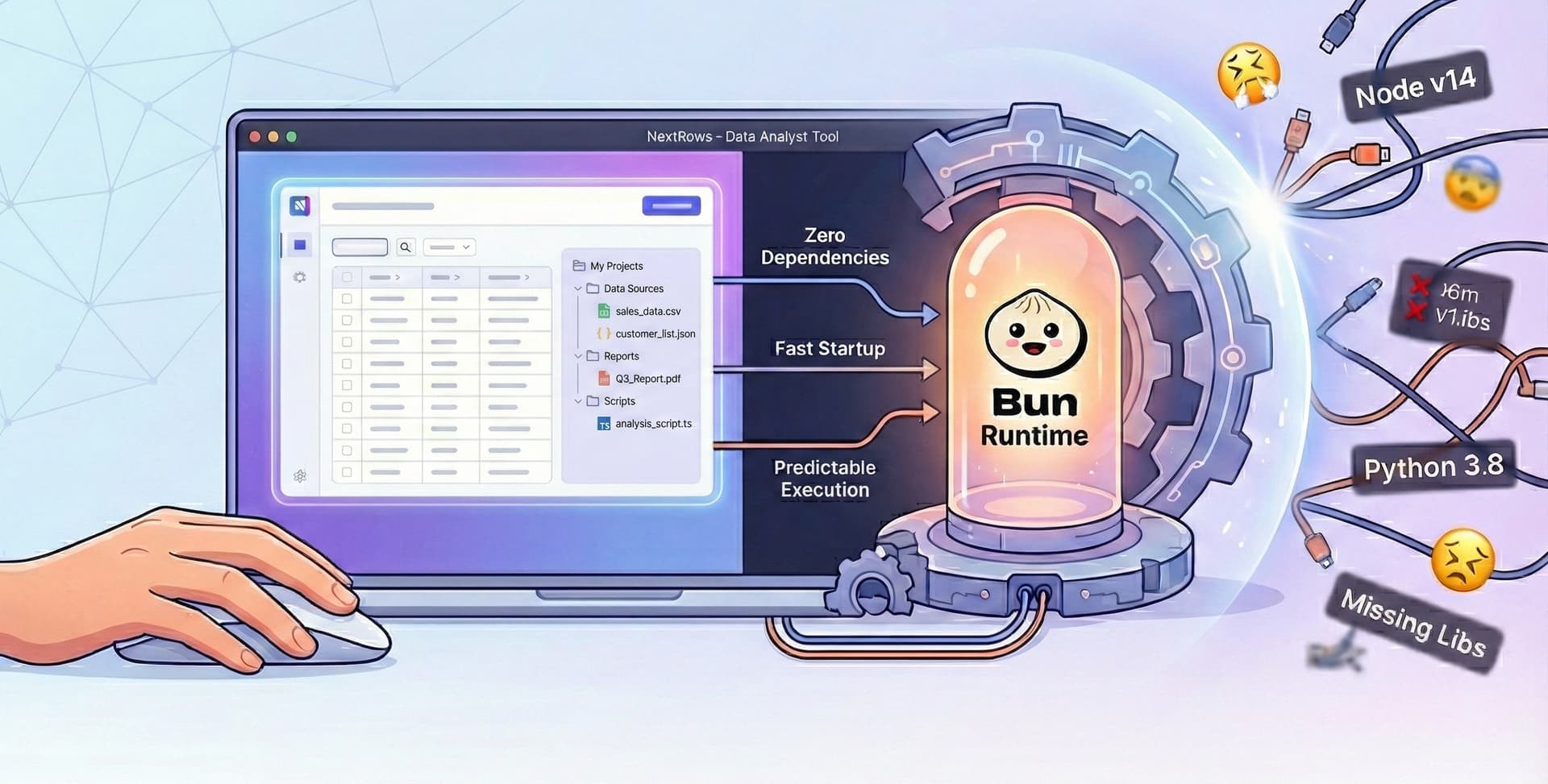
NextRows targets users—research assistants, operators, marketers, and analysts—who rely on desktop tooling that must “just work.” These users never manage development environments, isolate runtimes, or troubleshoot dependency conflicts. For them, a desktop app must operate consistently across machines, remain self-contained, and avoid any assumptions about local system configuration.
To meet these constraints, we needed a runtime that delivered:
- Zero external dependencies
- Deterministic execution across macOS and Windows
- Fast startup for short, frequent operations
- A unified toolchain with minimal surface area
- A runtime we could embed, version, and control fully
Bun fit this requirement set more directly than Node.js or Python-based approaches.
Eliminating the System-Dependency Problem
Non-engineer users often run into issues when applications depend on system-installed runtimes. These problems include:
- Conflicting global Node.js versions
- Missing build tools (Python, Xcode CLI, MSVC)
- Architecture mismatches (ARM vs x86)
- Security policies blocking runtime installation
Embedding Bun in the desktop application allowed us to remove every one of these failure points. The app ships with:
- A fully bundled JavaScript runtime
- A consistent JavaScriptCore engine
- A predictable filesystem and network stack
- A locked-in toolchain version
This ensures the desktop environment behaves identically regardless of the host OS or local configuration.
Runtime Architecture with Bun
At runtime, NextRows uses Bun for three major responsibilities:
1. Local Data and File Processing Engine
Key data operations—CSV parsing, Excel normalization, content extraction, schema inference—execute inside Bun workers. Bun’s low startup overhead reduces latency in short-lived tasks, and the JSC-based engine keeps peak memory usage low.
2. Automation and Background Tasks
Cron jobs and automation flows require isolated execution without degrading UI responsiveness. Bun’s worker model enables a lightweight process-per-task architecture. Workers spawn quickly, execute predictable workloads, and terminate cleanly.
3. Embedded Distribution Layer
By embedding Bun directly in the app bundle, we control:
- Runtime version
- Available APIs
- Platform behavior
- Security boundaries
This reduces the operational surface area and aligns with our design requirement of a fully self-contained system.
Toolchain Consolidation
Bun’s integrated bundler, transpiler, and test runner allowed us to collapse what was previously a multi-step pipeline. This yielded:
- Faster builds
- Fewer dependencies in CI
- Reduced variability in artifact generation
- Simplified release engineering
A single toolchain lowers maintenance cost and minimizes the risk of dependency drift.
Resulting User Impact
Although our audience is non-engineers, the engineering decisions behind the runtime directly shape their experience:
- Faster cold start
- Predictable behavior across devices
- Lower CPU and memory use on mid-range hardware
- Zero requirement for runtime installation
- Stronger isolation for enterprise deployments
Users experience a desktop app that functions more like a native binary than a typical JavaScript desktop environment.
Conclusion
For teams considering Bun, our primary takeaway is that its embeddability, startup characteristics, and integrated tooling make it a strong fit for self-contained desktop applications, especially when targeting users who cannot manage their own dev environment. The runtime is predictable, lightweight, and operationally simple—three properties that map directly to the reliability expectations of non-engineer end users.
Want Clean Tables With Zero Stress?
NextRows makes scraping and cleaning data simple. Our powerful AI Agent helps you save hours every week on repetitive tasks.
No credit card required • Free trial available
Related articles
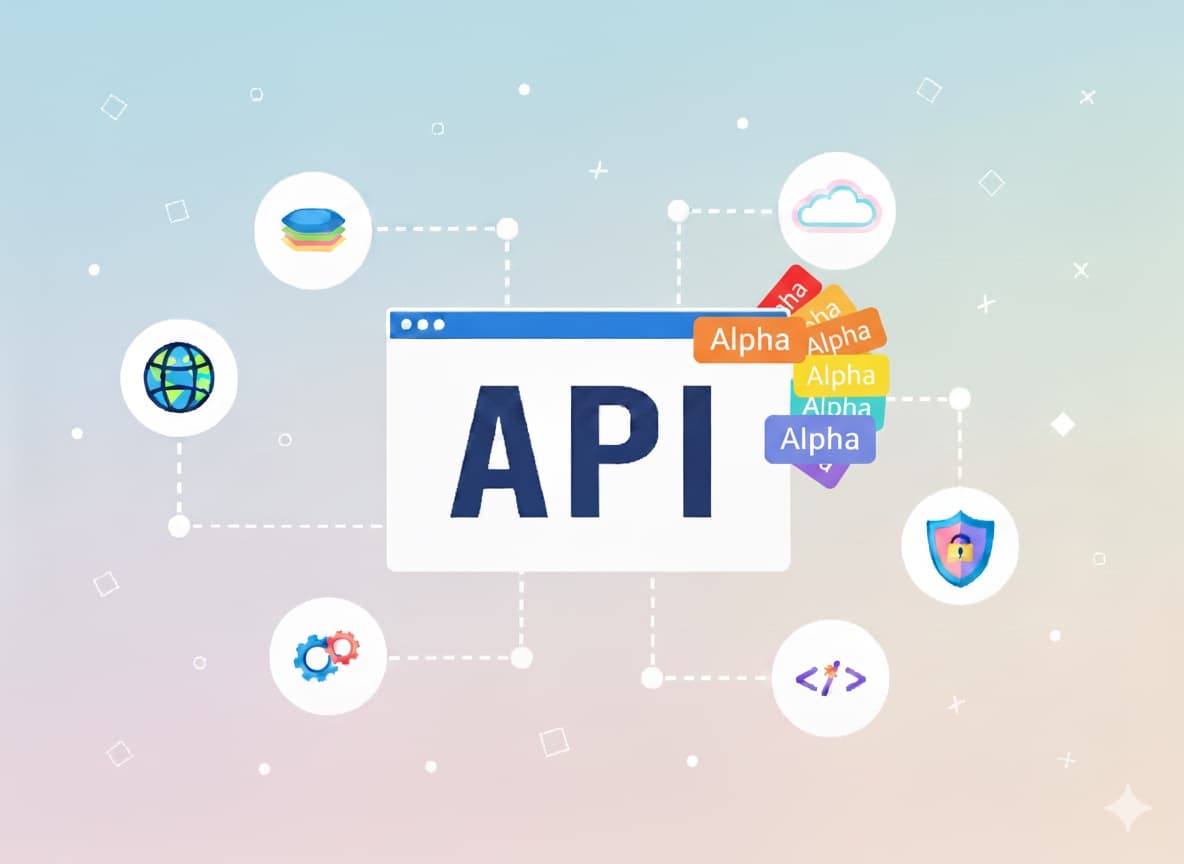
Introducing the NextRows API (Alpha)!
We're excited to announce the NextRows API! Access our intelligent data extraction capabilities programmatically with a simple, clean RESTful API. Now in alpha - try it today!

Our Work to NeurIPS 2025 | NEXT-EVAL: Next Evaluation of Traditional and LLM Web Data Record Extraction
We've submitted our groundbreaking evaluation framework for web data extraction to NeurIPS 2025. Learn how we're setting new standards for comparing traditional and LLM-based extraction methods.
Why a Specialized LLM Was the Key to Our Multilingual Strategy
Discover how NextRows uses Upstage Solar LLM to deliver exceptional Korean language support, improving user satisfaction by 20% while maintaining speed and accuracy.